In the competitive taxi industry, understanding where and when your customers need you most can make the difference between a thriving business and one that's always playing catch-up. Traditional flyer campaigns have long been a staple of taxi marketing, but they've always suffered from a critical blindspot: you distribute thousands of flyers but have no idea which ones actually drive bookings. QR codes are changing this game entirely, transforming simple promotional materials into sophisticated demand-mapping tools.
For taxi operators – whether you're running a single car or managing a fleet of dozens – the ability to understand where your next customers will come from is invaluable. QR-enabled marketing materials don't just make booking easier for customers; they create a continuous stream of market intelligence that can transform how you operate your business.
The Blind Spot in Traditional Flyer Campaigns
Taxi companies have been distributing flyers, business cards, and promotional materials for decades. It's a proven approach for building local awareness. But traditional print marketing has always had a fundamental problem: you have no idea what happens after the flyer leaves your hand.
Consider the typical scenario: you print 5,000 flyers and distribute them across different areas – hotels, restaurants, office buildings, residential letterboxes. Some of those flyers generate bookings, but which ones? Was it the hotel distribution that worked, or the office buildings? Did the residential drop in the new housing estate pay off?
Without tracking, you're essentially guessing. And guessing means:
- Wasting money on ineffective distribution locations
- Missing opportunities in high-potential areas
- Unable to optimise your marketing spend
- No data to inform fleet positioning decisions
QR codes solve this problem by creating a trackable link between your physical marketing and customer engagement.
Turning Flyers into Demand Intelligence Tools
When a taxi company adds QR codes to their flyers, each scan becomes a data point revealing not just interest, but crucial context. Through QR Insights' analytics platform, you can see exactly when and where people are scanning your codes.
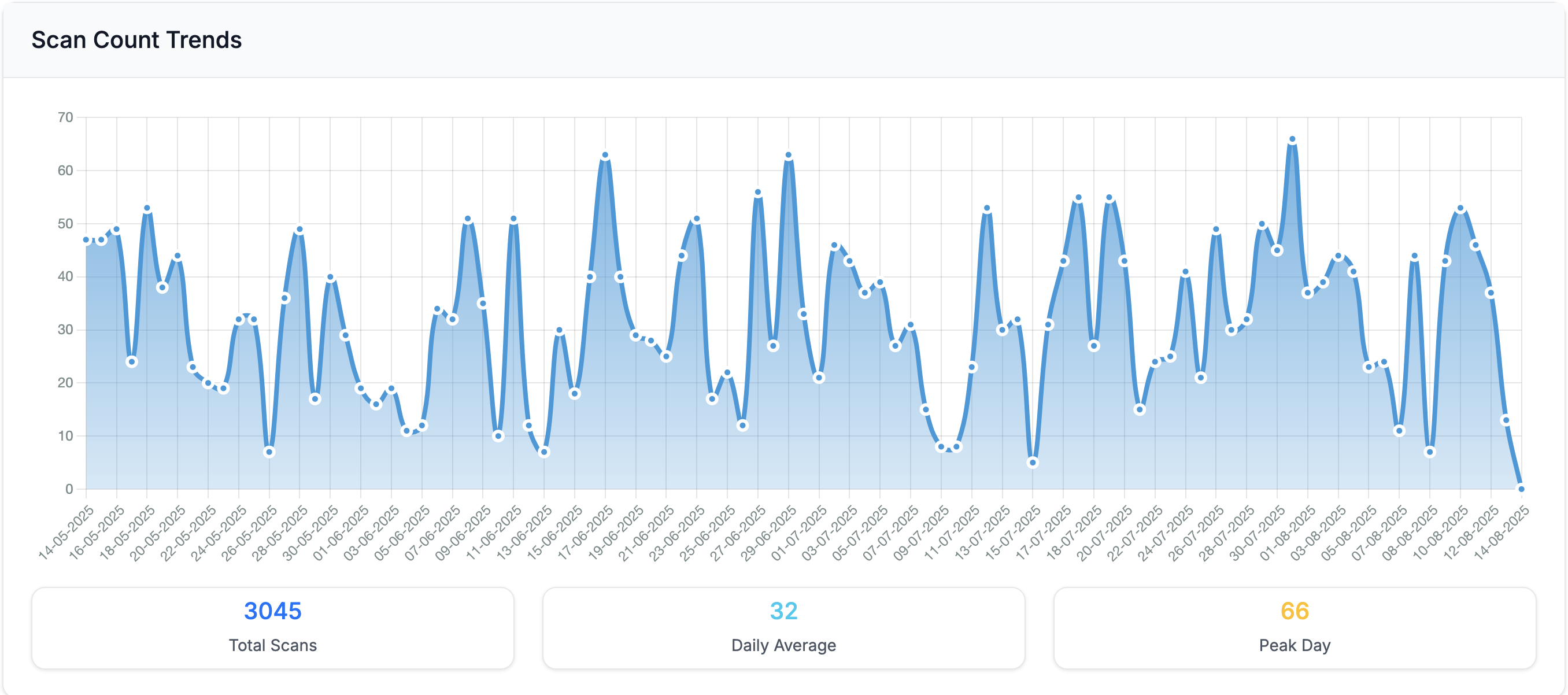
A flyer distributed in the business district might see heavy scanning during weekday mornings and evenings, while residential area flyers peak on weekend nights. This isn't just marketing metrics – it's real-time demand intelligence that can revolutionise your operations.
The data you collect includes:
- Scan timing – Exactly when people engage with your materials
- Location patterns – Where your engaged customers are based
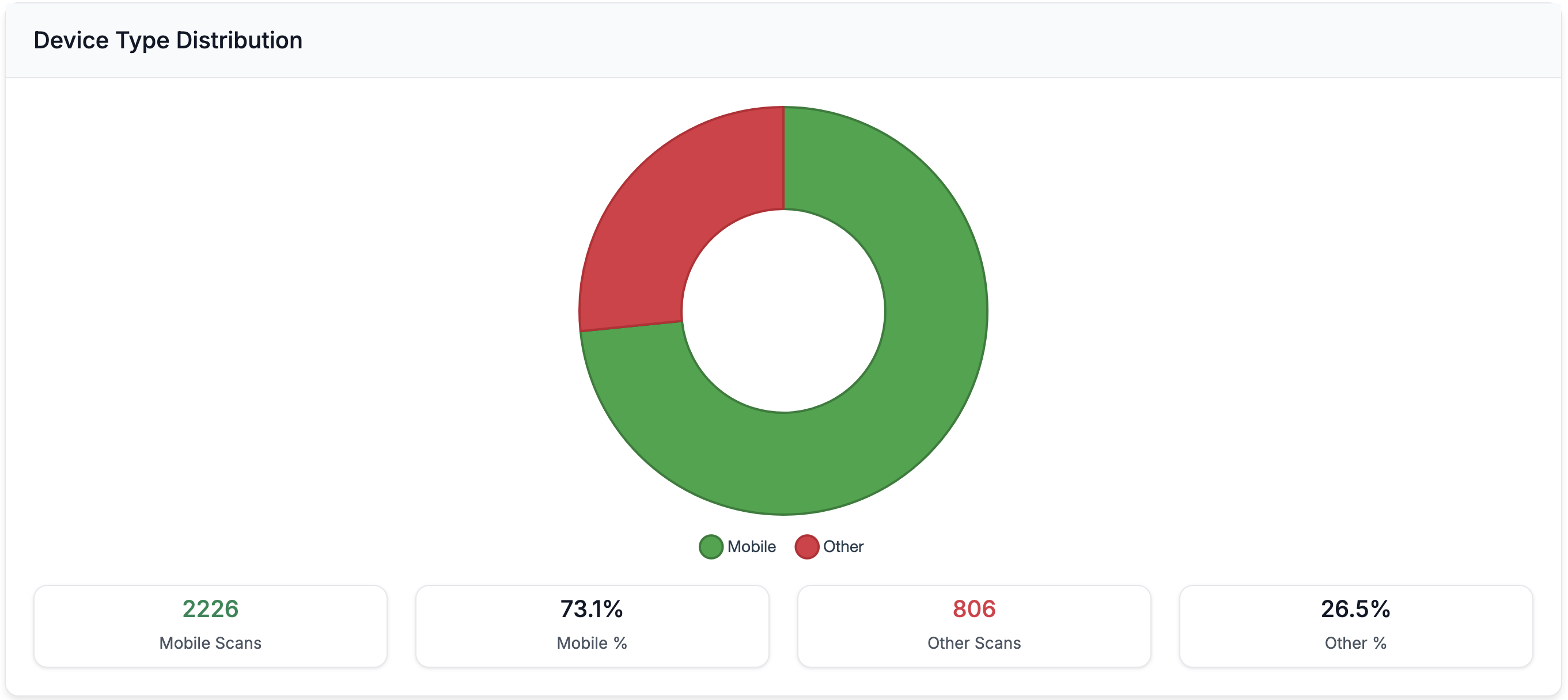
- Device information – What phones your customers use
- Repeat engagement – Who keeps coming back to your booking page
Fleet Positioning Based on Real Data
The location data from QR tracking is particularly transformative for fleet management. Imagine discovering that flyers distributed near the university generate three times more scans on Thursday nights compared to other areas. Or that the flyers placed in hotels show consistent scanning patterns aligned with check-out times.
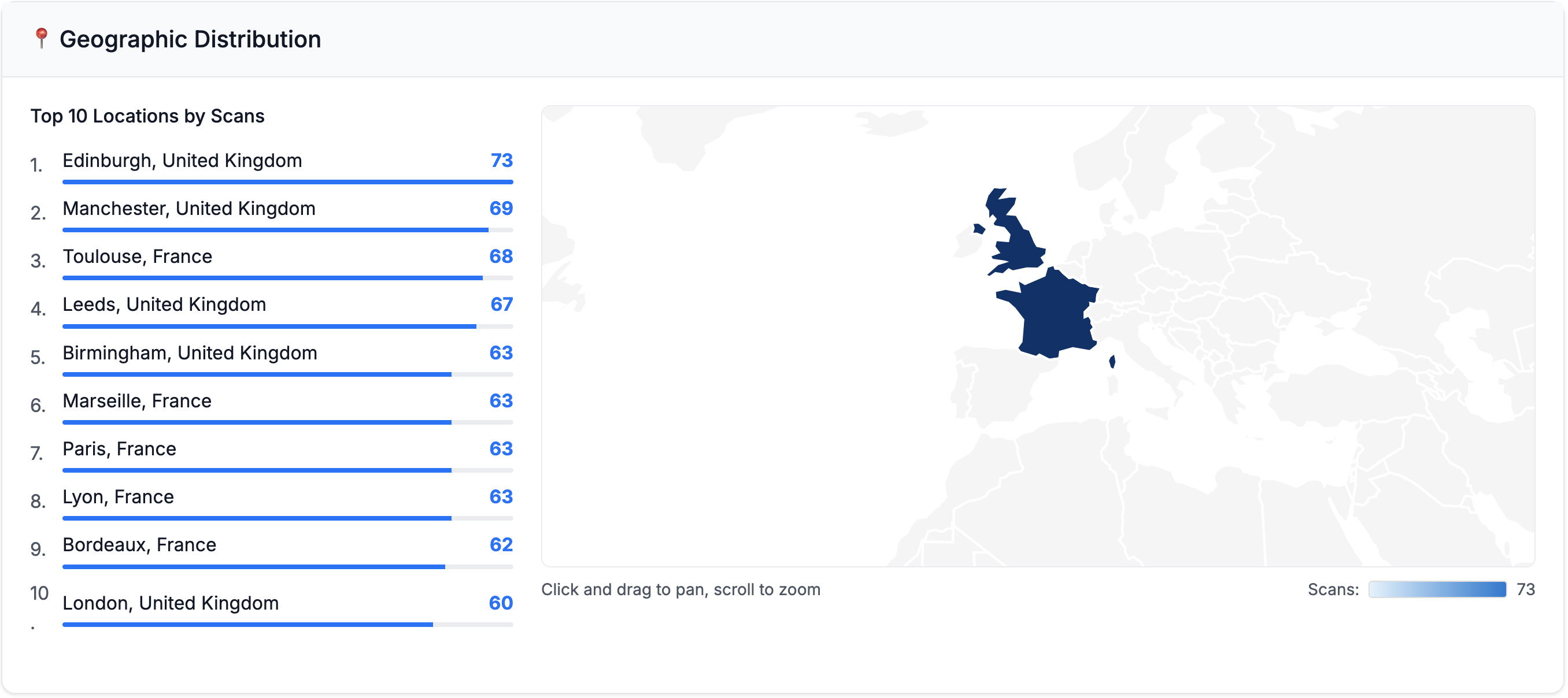
This information allows you to pre-position vehicles where demand will spike, reducing wait times and increasing customer satisfaction while maximising driver earnings. Instead of reactive dispatching – waiting for bookings to come in – you can practice predictive positioning.
Practical Applications
Morning Rush Patterns: If business district flyers show heavy scanning between 7-9am on weekdays, position vehicles near those office buildings before the rush starts.
Weekend Entertainment: Track which nightlife areas generate the most late-night scans and ensure adequate coverage during peak hours.
Event-Based Demand: When special events occur, compare scan patterns to identify where attendees are likely to need transportation.
Weather Correlations: You might discover that certain neighbourhoods show increased scanning activity during specific weather conditions – perhaps office workers in the financial district scan more during rain, while suburban areas spike during extreme temperatures.
Customer Journey Optimisation
Beyond operational insights, QR codes on taxi flyers create a superior customer experience. Instead of requiring customers to save a phone number or download an app immediately, the QR code can lead to a mobile-optimised booking page where they can instantly request a ride.
The customer journey becomes frictionless:
- Customer sees your flyer and scans the QR code
- They land on a mobile-optimised booking page
- They can book immediately, save for later, or set up recurring rides
- Their contact details are captured for future marketing
Studies show that QR code users are 60% more likely to complete a booking compared to those who have to manually enter information. The friction reduction is dramatic – and every point of friction you remove increases your conversion rate.
Pro Tip: Use time-based redirects to show different content based on when someone scans. Morning scanners could see your commuter package, while evening scanners see entertainment district specials or airport transfer promotions.
A/B Testing Different Offers and Messages
The campaign optimisation opportunities with QR tracking are endless. You can test different offers in different areas and measure response rates precisely.
Consider testing:
- "10% off your first ride" – Might perform better in tourist areas or hotels
- "Priority booking for regular customers" – Could resonate in business districts
- "Fixed price airport transfers" – Test near transport hubs and business hotels
- "Safe rides home guaranteed" – Potentially effective in nightlife areas
With QR tracking, you'll know definitively which offers drive the most engagement in each location. No more guessing – just data-driven marketing decisions.
Scaling Your Business with Data
For multi-car operators or taxi companies looking to scale, this data becomes even more powerful. Identifying underserved areas with high scan rates but low booking conversion might indicate opportunity for expansion – there's demand there, but something in your service isn't meeting it.
Conversely, areas with low engagement might need different marketing approaches or could be deprioritised for fleet allocation. The QR code essentially turns every flyer into a market research tool, continuously gathering intelligence about where your next customers will come from.

Building a Customer Database
Every scan is also an opportunity to build your customer database. When someone engages with your QR code, you can capture their details for future marketing – text message promotions, email newsletters about new services, or targeted offers based on their location and booking patterns.
Measuring Marketing ROI
For the first time, you can calculate the true return on your flyer campaigns. If 1,000 flyers in Area A generate 150 scans and 30 bookings, while 1,000 flyers in Area B generate 50 scans and 5 bookings, you know exactly where to focus your next distribution effort.
Implementation: Getting Started
Setting up QR-tracked flyers is straightforward:
Step 1: Create a mobile-optimised booking page or use your existing booking system.
Step 2: Generate unique QR codes for different distribution areas using QR Insights. Label them clearly (e.g., "Hotel District Q1", "University Area Q1").
Step 3: Print flyers with QR codes prominently displayed. Include a clear call-to-action like "Scan to book instantly" or "Scan for 10% off your first ride".
Step 4: Distribute strategically and track results in your dashboard.
Step 5: Review analytics weekly, identify patterns, and adjust your strategy accordingly.
The Competitive Advantage
Smart taxi operators are realising that QR-enabled flyers aren't just about making booking easier – they're about transforming a traditionally blind marketing channel into a strategic advantage that improves every aspect of the business.
While competitors continue distributing flyers with no insight into what works, you'll be building a detailed picture of demand patterns across your service area. You'll know which locations, times, and offers drive the most business – and you'll be able to continuously optimise based on real data rather than gut feeling.
In an industry where margins are tight and competition is fierce, the operators who embrace data-driven marketing will be the ones who thrive. QR code tracking isn't just a nice-to-have – it's becoming essential for any taxi business serious about growth.