Fashion brands invest millions in billboard advertising, yet have historically struggled with a fundamental question: did that stunning billboard actually drive sales, or did customers find them through organic search later? This attribution blindness has plagued outdoor advertising for decades, making it nearly impossible to calculate true ROI or optimise campaign placement. QR codes are finally solving this challenge, creating a measurable bridge between physical advertising and digital conversion.
For fashion marketers – whether you're managing campaigns for a global luxury house or a growing independent label – the ability to connect outdoor advertising spend directly to customer acquisition is transformative. QR-enabled billboards don't just create brand awareness; they create trackable customer journeys that prove the value of every placement.
The Attribution Problem in Outdoor Advertising
Outdoor advertising has always been the black box of marketing spend. You know roughly how many people pass your billboard based on traffic data. You can estimate impressions. But when sales increase after a billboard campaign, how much credit does the billboard deserve versus your social media, your influencer partnerships, or plain organic discovery?
The traditional approach to measuring billboard effectiveness has been crude at best:
- Brand lift studies – Expensive, slow, and sample-based
- Correlation analysis – "Sales went up 15% during the campaign period" (but was it the billboard?)
- Customer surveys – "Where did you hear about us?" (people rarely remember accurately)
- Foot traffic data – Suggestive but not conclusive
The result? Fashion brands often treat billboards as a necessary branding expense rather than a measurable performance channel. Marketing teams struggle to justify billboard spend to CFOs who can see exact ROI on digital campaigns but get vague "brand awareness" metrics for outdoor.
QR codes change this equation entirely by creating a direct, trackable link between billboard impression and customer action.
Creating Trackable Customer Journeys
When a fashion brand adds a QR code to their billboard, they're creating a trackable pathway from impression to purchase. Each scan represents a customer actively choosing to engage with your brand, moving from passive viewing to active interest.
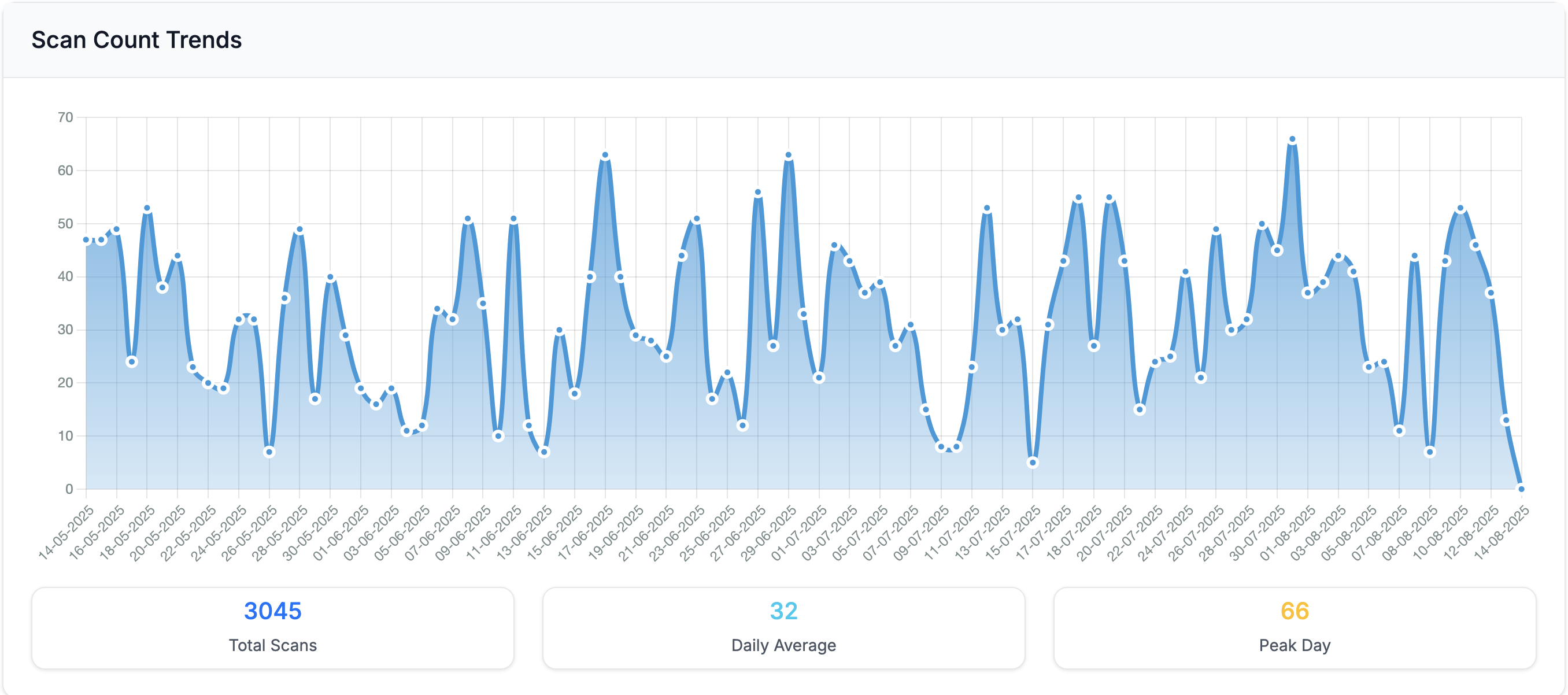
More importantly, these scans can be tagged and tracked through your entire sales funnel. That customer who scanned your billboard in Piccadilly Circus and purchased three days later? You now know exactly which touchpoint initiated their journey, rather than incorrectly attributing it to a Google search or direct traffic.
The data you collect includes:
- Scan timing – Precisely when customers engage with each billboard
- Location correlation – Which placements drive the most engagement
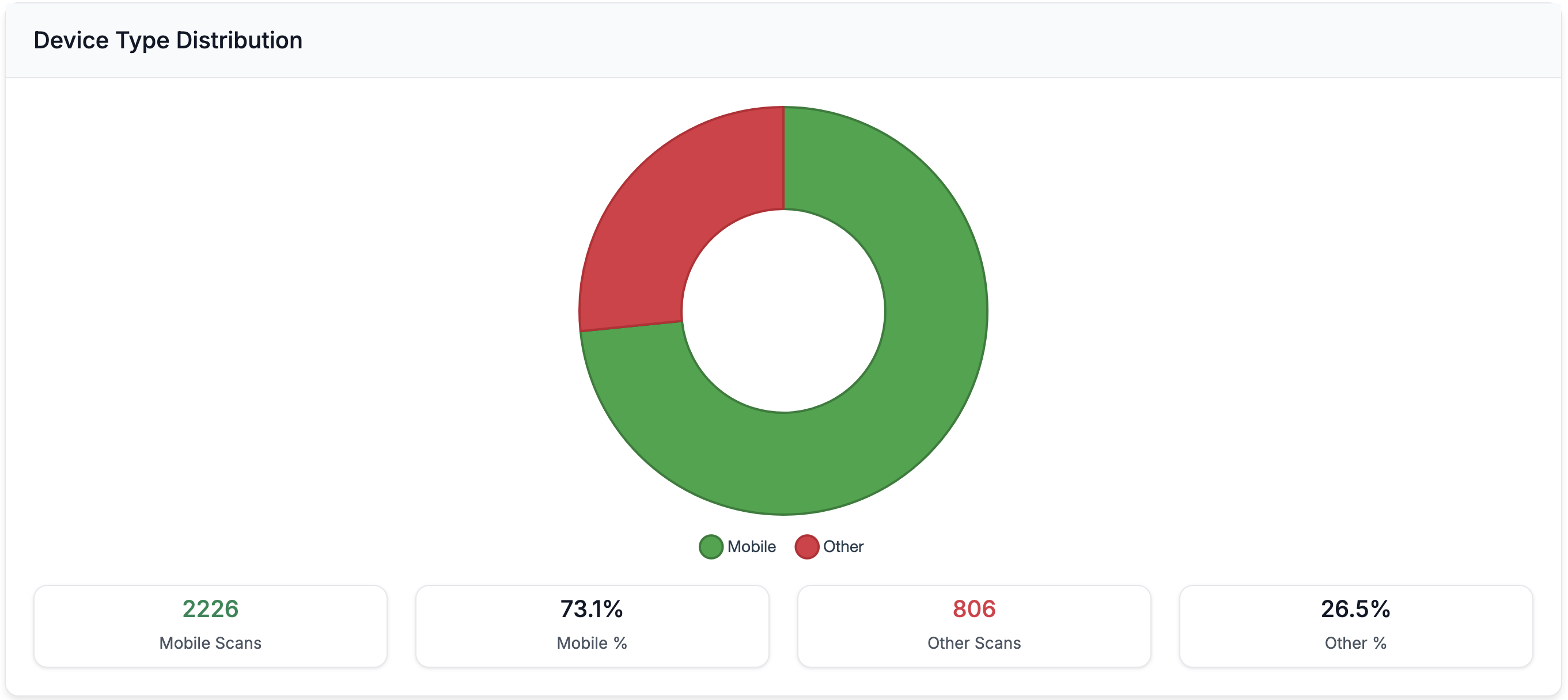
- Device data – What devices your billboard audience uses
- Conversion tracking – Full funnel from scan to purchase
- Repeat engagement – How many scanners return to your site
Location-Based Insights for Media Planning
The implications for campaign optimisation are profound. QR Insights data reveals not just how many people scan, but when and where they do so. This granular understanding allows for sophisticated media planning that maximises impact.
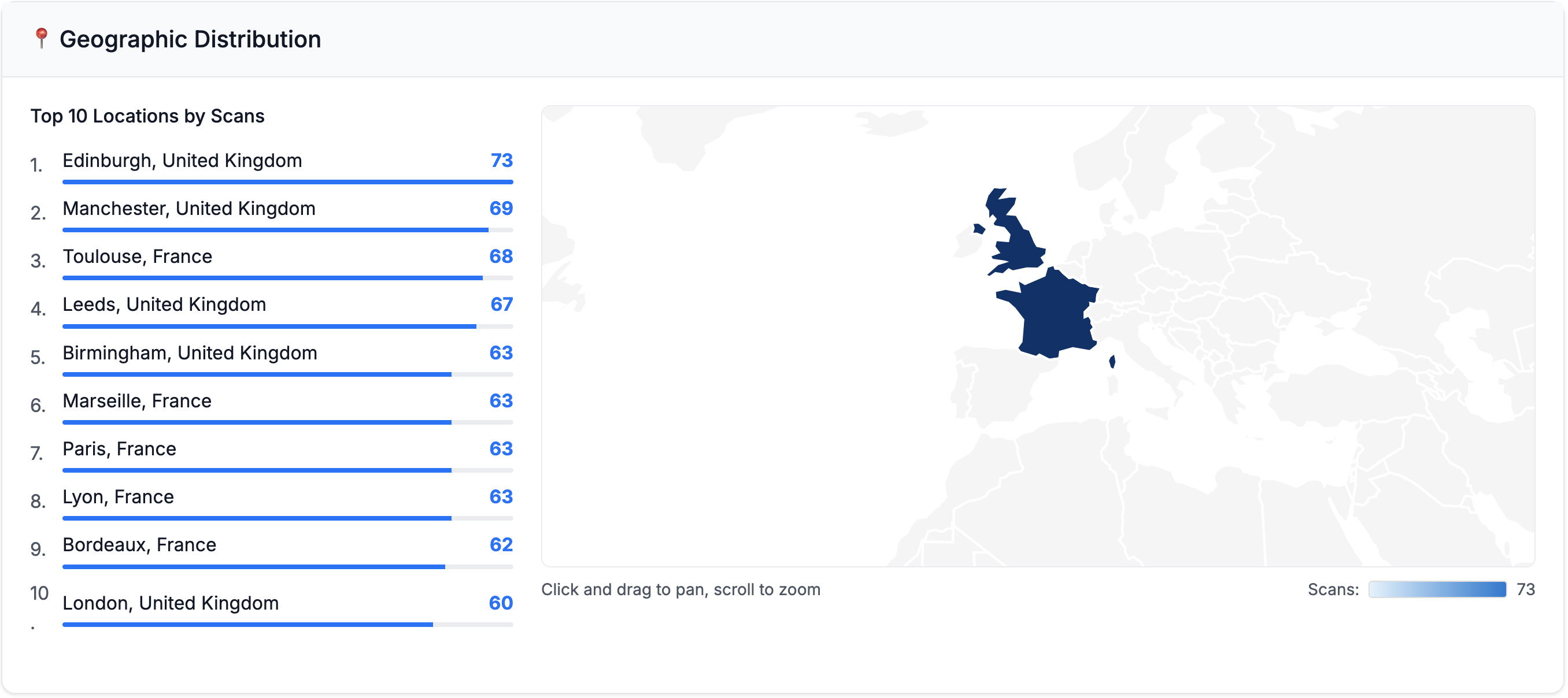
Commuter Patterns: A billboard near a busy train station might generate most scans during morning rush hour, suggesting commuters are researching during their journey. This tells you the billboard is reaching working professionals with time to browse – potentially your target demographic.
Shopping District Behaviour: Weekend scans from billboards in retail areas might show immediate conversion to store visits. These scanners have high purchase intent and are already in a shopping mindset.
Residential Area Insights: Evening scans from neighbourhood billboards might indicate people researching from home – perhaps comparing prices or exploring your full collection before committing.
Pro Tip: Use different QR codes for each billboard location. This allows you to compare performance directly – if your Oxford Street billboard generates 500 scans with a 3% conversion rate while your Shoreditch billboard generates 300 scans with a 7% conversion rate, you know exactly where your audience is most engaged.
Retargeting Billboard Scanners
Traditional billboards create awareness but lose the audience immediately. With QR codes, every scanner enters your digital ecosystem. This opens game-changing retargeting opportunities:
- Custom audiences – Add scanners to social media retargeting lists
- Personalised emails – Send campaigns based on which collection they viewed
- Dynamic ads – Show them the specific products they browsed
- Lookalike targeting – Find more customers similar to your billboard scanners
This transforms a one-time billboard view into an ongoing customer relationship. Someone who casually scanned your billboard while waiting for a bus can be nurtured through your marketing funnel over the following weeks, eventually converting when the time is right.
A/B Testing Creative Approaches
Consider the creative testing possibilities QR tracking enables. Different billboards can feature different QR codes leading to customised experiences, and you can measure exactly which approaches perform best.
Location-Tailored Content:
- Billboard in trendy neighbourhood → Links to streetwear collection
- Billboard in business district → Showcases professional wear
- Billboard near universities → Features student discount offers
- Billboard in affluent area → Highlights premium lines
Creative Testing:
- Does the minimalist campaign outperform the lifestyle shots?
- Do celebrity endorsements drive more scans than product-focused imagery?
- Does seasonal messaging (summer collection vs. new arrivals) affect engagement?
QR data provides definitive answers to questions fashion marketers have debated for years. Instead of subjective creative preferences, you can make data-driven decisions about what resonates with your audience.
Seasonal and Temporal Analysis
The seasonal and temporal insights are particularly valuable for fashion brands. Tracking might reveal patterns you'd never discover otherwise:
Fashion Week Effects: Certain billboard locations might see increased engagement during fashion weeks as audiences become more fashion-conscious and actively seek new collections.
Sale Period Behaviour: Track how scanning patterns change during promotional periods. Do customers engage more when there's a sale message, or does full-price creative perform equally well?
Seasonal Transitions: Discover exactly when customers start thinking about the next season. If your winter coat billboard starts getting more scans in late September, you know when to launch your seasonal campaigns.

This intelligence informs not just where to place billboards, but when to rotate creative, launch new campaigns, or increase digital support for outdoor advertising.
Bridging Online and Offline
For fashion brands operating both e-commerce and physical retail, QR codes solve the online-to-offline attribution puzzle. Scanners can receive exclusive in-store offers, driving foot traffic while maintaining tracking through to purchase.
Example Customer Journey:
- Customer scans billboard on their commute
- They browse your summer collection on their phone
- Landing page offers "20% off when you visit us in-store this week"
- They visit your retail location and mention the offer
- You've now tracked a direct line from billboard → store visit → purchase
The QR data tells you which outdoor placements drive the most valuable store visits. You might discover that certain billboard locations drive higher average transaction values or better customer lifetime value – insights that completely change how you evaluate placement decisions.
Measuring True ROI
For the first time, fashion brands can calculate genuine return on billboard investment. If a billboard placement costs £15,000 per month and generates 2,000 scans with a 5% conversion rate and £75 average order value, that's:
2,000 scans × 5% conversion × £75 AOV = £7,500 direct revenue
But that's just the immediate picture. Factor in:
- Retargeting conversions over the following 30 days
- Customer lifetime value of acquired customers
- In-store visits driven by the campaign
- Brand awareness from the broader audience who saw but didn't scan
Suddenly you can make an informed case for billboard investment – or identify placements that aren't delivering value and should be cut.
Getting Started: QR-Enabled Billboard Campaigns
Implementing QR tracking on your billboard campaigns is straightforward:
Step 1: Create mobile-optimised landing pages for each campaign or collection you're promoting. These should load fast and look stunning on mobile devices.
Step 2: Generate unique QR codes for each billboard location using QR Insights. Label them clearly so you can track performance by placement.
Step 3: Integrate QR codes into your billboard creative. Ensure they're large enough to scan from viewing distance and include a compelling call-to-action.
Step 4: Connect your QR tracking with your e-commerce analytics to follow the full customer journey from scan to purchase.
Step 5: Review performance weekly, compare locations, and optimise your placements based on real data.
The Competitive Advantage
In fashion's fast-moving landscape, understanding which locations and messages resonate helps you move faster than competitors still guessing at billboard effectiveness. You can quickly identify winning combinations and scale them, or pivot away from underperforming placements before wasting entire campaign budgets.
Fashion brands embracing QR-tracked billboards aren't just improving their attribution – they're fundamentally reimagining how outdoor advertising fits into an omnichannel strategy. By creating measurable, trackable, and optimisable outdoor campaigns, they're turning what was once a branding exercise into a performance marketing channel that drives measurable business results.
While competitors continue treating billboards as unmeasurable brand spend, you'll be optimising every placement, testing every creative approach, and building a data-driven outdoor advertising strategy that delivers provable ROI. In an industry where marketing efficiency increasingly determines success, that's a significant competitive advantage.